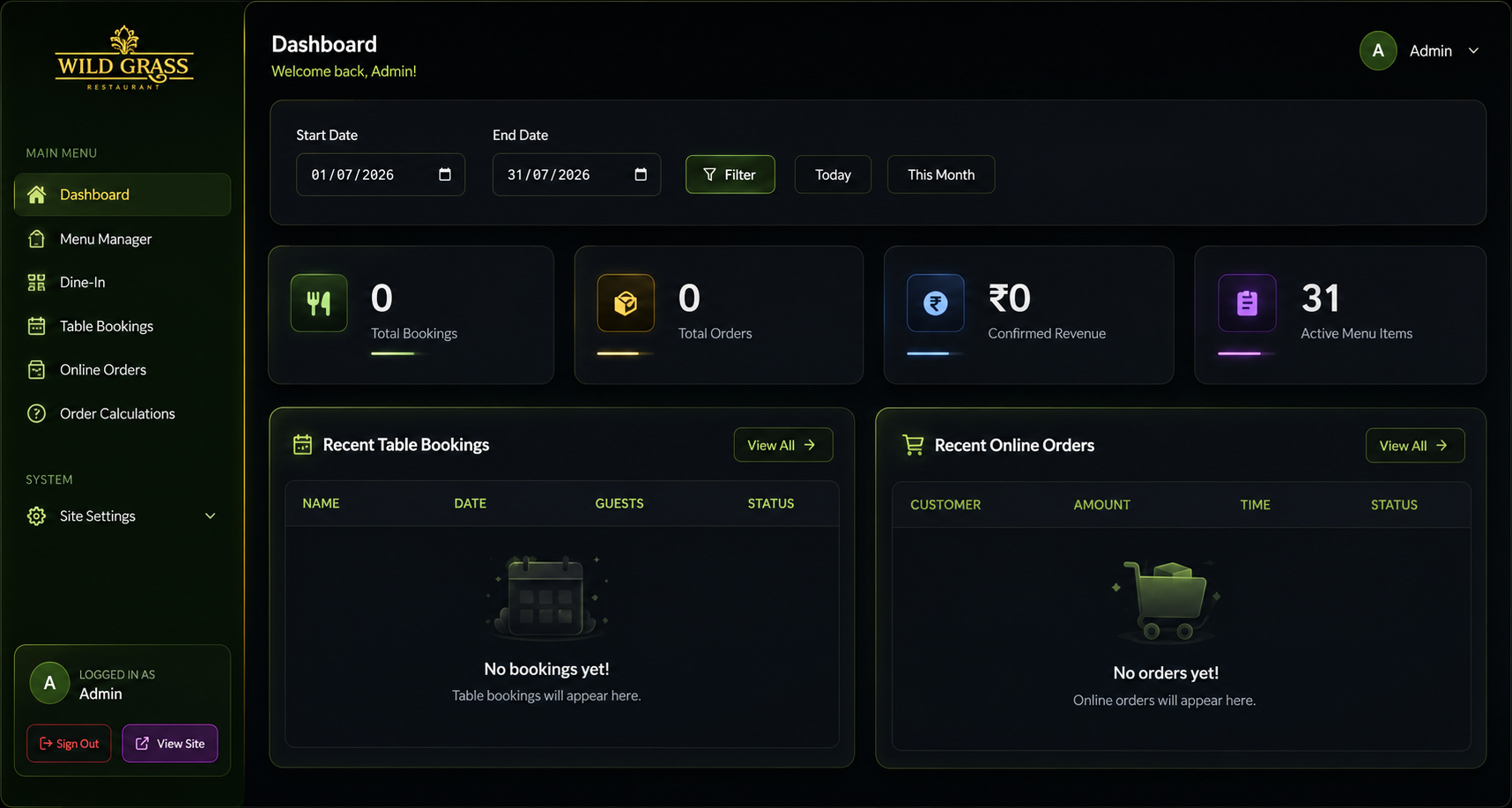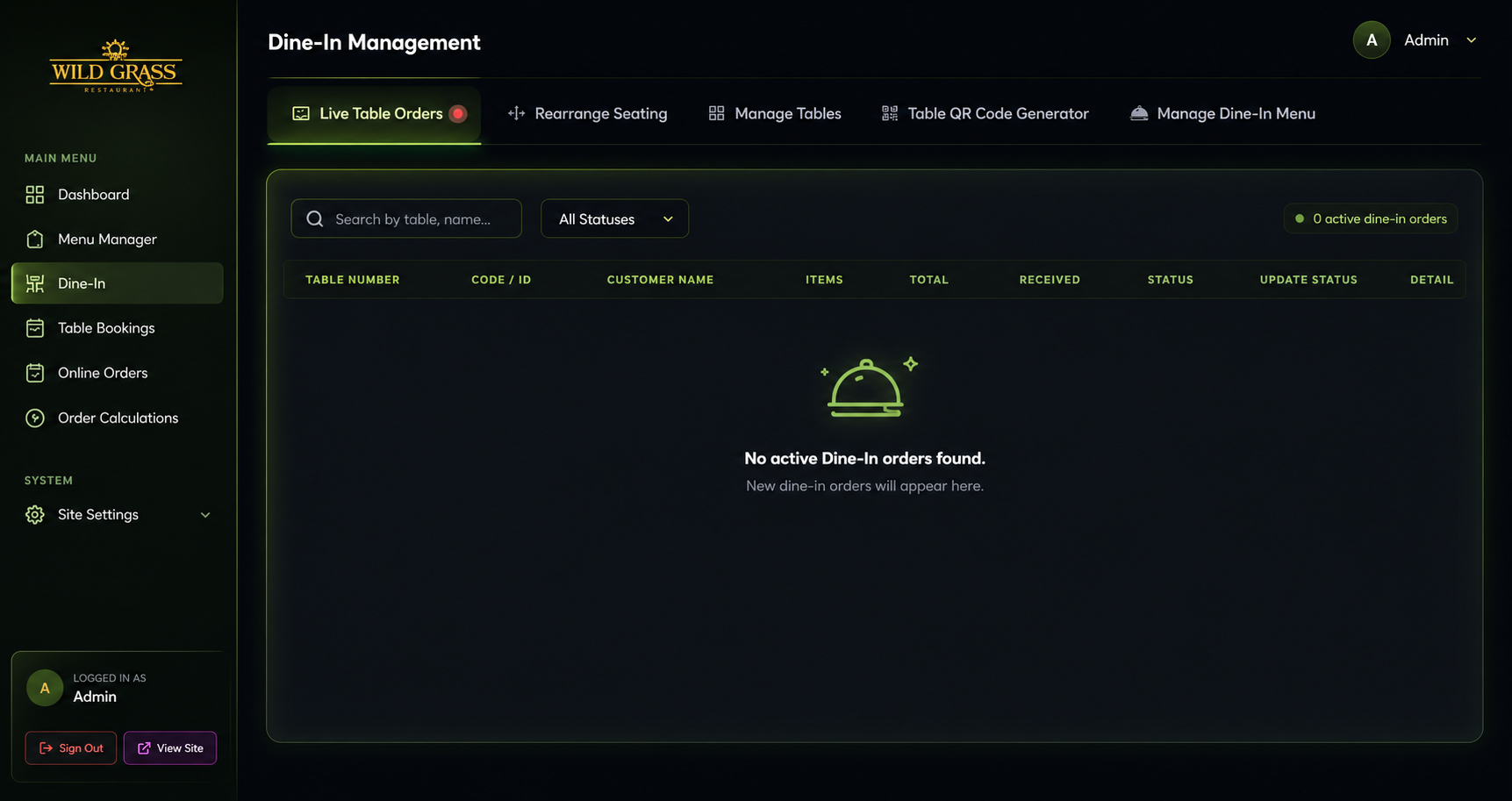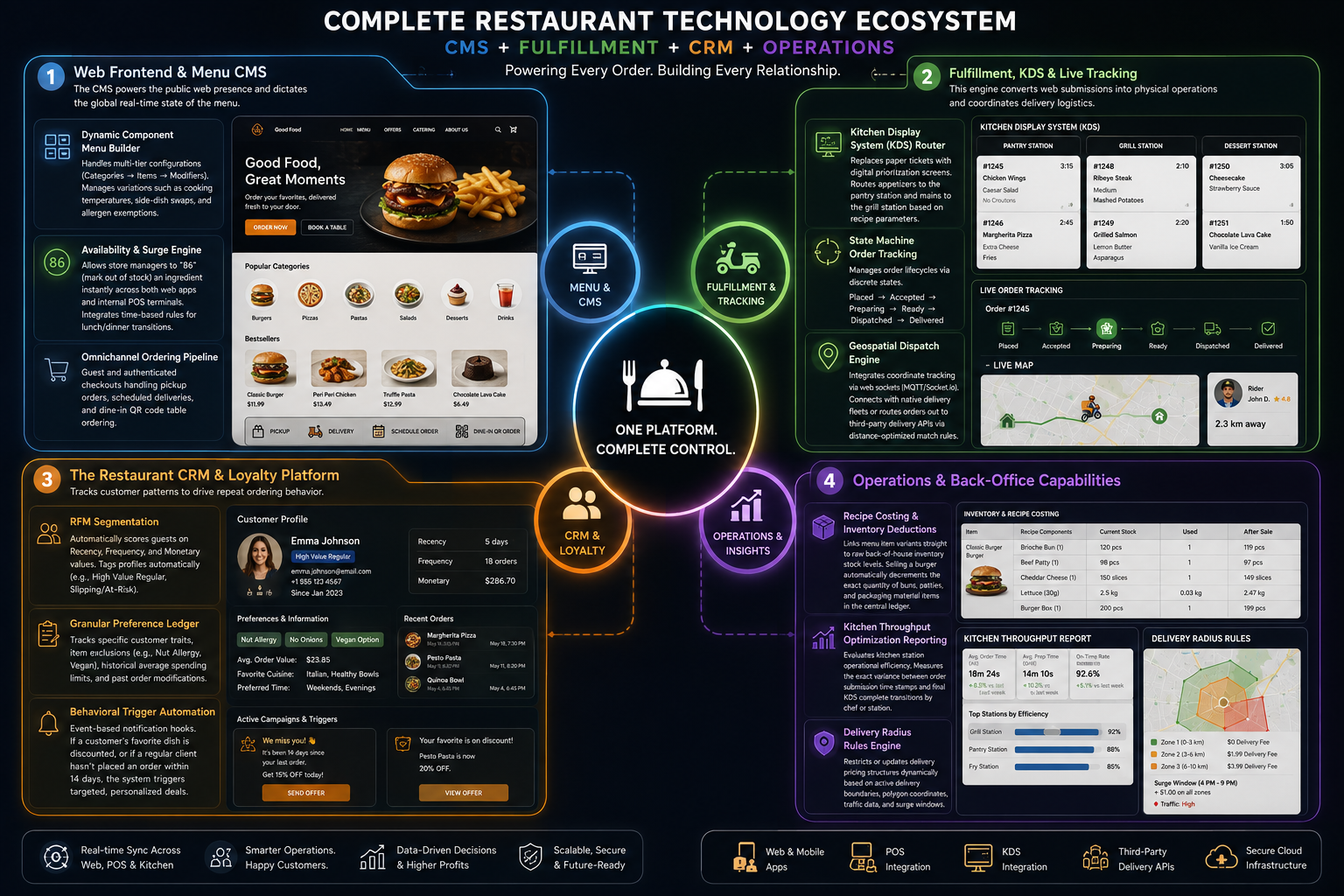
// case study
Restaurant Management System
Restaurant Management System
- PHP
- MySQL
- JS
- CSS
1. Web Frontend & Menu CMS
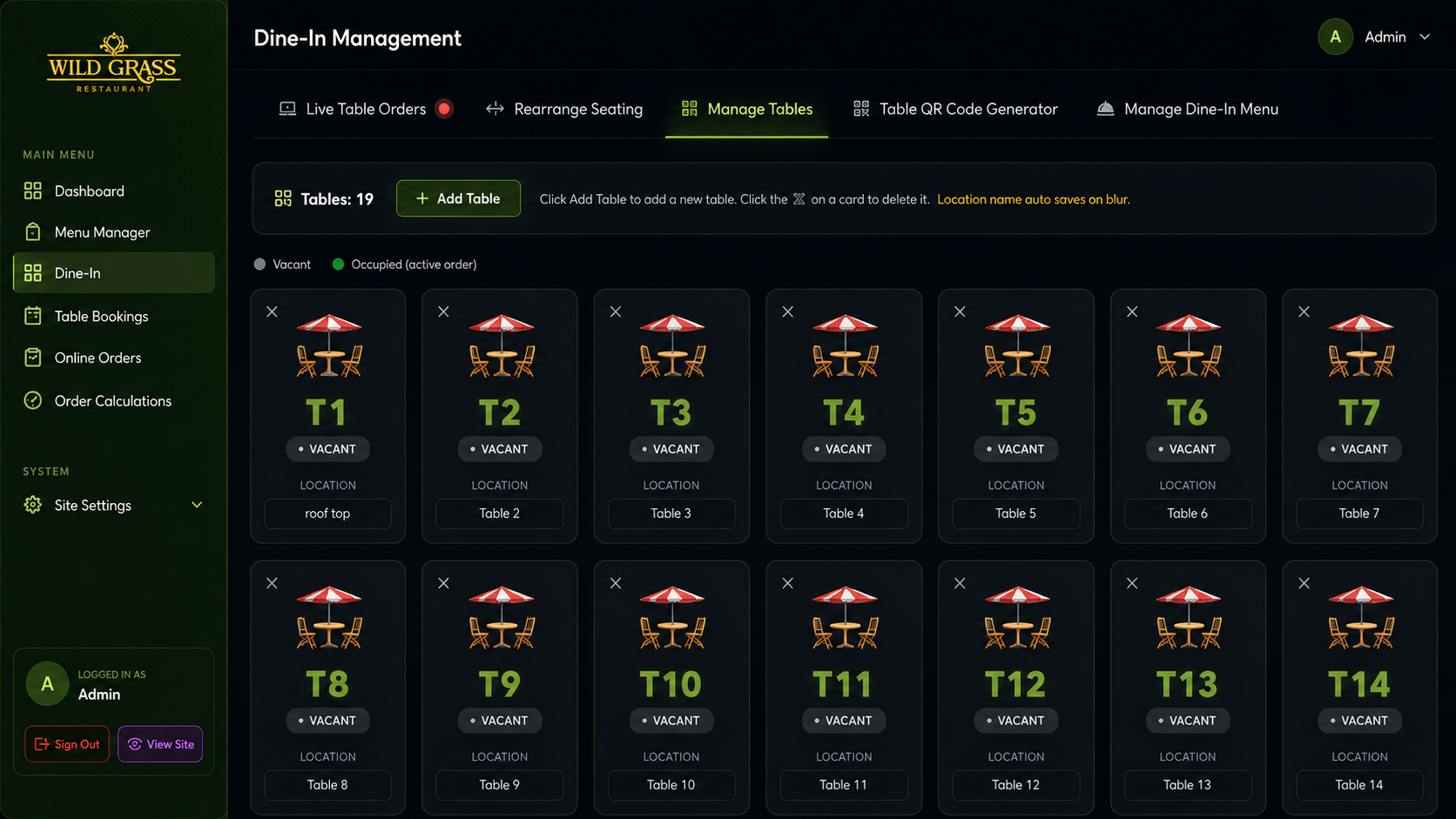
The CMS powers the public web presence and dictates the global real-time state of the menu.
• Dynamic Component Menu Builder: Handles multi-tier configurations (Categories). Manages variations such as cooking temperatures, side-dish swaps, and allergen exemptions.
• Availability & Surge Engine: Allows store managers to "86" (mark out of stock) an ingredient instantly across both web apps and internal Point of Sale (POS) terminals. Integrates time-based rules for lunch/dinner transitions.
• Omnichannel Ordering Pipeline: Guest and authenticated checkouts handling pickup orders, scheduled deliveries, and dine-in QR code table ordering.
2. Fulfilment, KDS & Live Tracking
This engine converts web submissions into physical operations and coordinates delivery logistics.
• Kitchen Display System (KDS) Router: Replaces paper tickets with digital prioritization screens. Routes appetizers to the pantry station and mains to the grill station based on recipe parameters.
• State Machine Order Tracking: Manages order lifecycles via discrete states: placed ,dispatched ,delivered.
• Geospatial Dispatch Engine: Integrates coordinate tracking via web sockets (MQTT/Socket.io). Connects with native delivery fleets or routes orders out to third-party delivery APIs via distance-optimized match rules.
3. The Restaurant CRM & Loyalty Platform
Tracks customer patterns to drive repeat ordering behavior.
• RFM Segmentation: Automatically scores guests on Recency, Frequency, and Monetary values. Tags profiles automatically (e.g., High Value Regular, Slipping/At-Risk).
• Granular Preference Ledger: Tracks specific customer traits, item exclusions (e.g., Nut Allergy, Vegan), historical average spending limits, and past order modifications.
• Behavioral Trigger Automation: Event-based notification hooks. If a customer's favorite dish is discounted, or if a regular client hasn’t placed an order within 14 days, the system triggers targeted, personalized deals.
4. Operations & Back-Office Capabilities
• Recipe Costing & Inventory Deductions: Links menu item variants straight to raw back-of-house inventory stock levels. Selling a burger automatically decrements the exact quantity of buns, patties, and packaging material items in the central ledger.
• Kitchen Throughput Optimization Reporting: Evaluates kitchen station operational efficiency. Measures the exact variance between order submission time stamps and final KDS complete transitions by chef or station.
• Delivery Radius Rules Engine: Restricts or updates delivery pricing structures dynamically based on active delivery boundaries, polygon coordinates, traffic data, and surge windows.
The CMS powers the public web presence and dictates the global real-time state of the menu.
• Dynamic Component Menu Builder: Handles multi-tier configurations (Categories). Manages variations such as cooking temperatures, side-dish swaps, and allergen exemptions.
• Availability & Surge Engine: Allows store managers to "86" (mark out of stock) an ingredient instantly across both web apps and internal Point of Sale (POS) terminals. Integrates time-based rules for lunch/dinner transitions.
• Omnichannel Ordering Pipeline: Guest and authenticated checkouts handling pickup orders, scheduled deliveries, and dine-in QR code table ordering.
2. Fulfilment, KDS & Live Tracking
This engine converts web submissions into physical operations and coordinates delivery logistics.
• Kitchen Display System (KDS) Router: Replaces paper tickets with digital prioritization screens. Routes appetizers to the pantry station and mains to the grill station based on recipe parameters.
• State Machine Order Tracking: Manages order lifecycles via discrete states: placed ,dispatched ,delivered.
• Geospatial Dispatch Engine: Integrates coordinate tracking via web sockets (MQTT/Socket.io). Connects with native delivery fleets or routes orders out to third-party delivery APIs via distance-optimized match rules.
3. The Restaurant CRM & Loyalty Platform
Tracks customer patterns to drive repeat ordering behavior.
• RFM Segmentation: Automatically scores guests on Recency, Frequency, and Monetary values. Tags profiles automatically (e.g., High Value Regular, Slipping/At-Risk).
• Granular Preference Ledger: Tracks specific customer traits, item exclusions (e.g., Nut Allergy, Vegan), historical average spending limits, and past order modifications.
• Behavioral Trigger Automation: Event-based notification hooks. If a customer's favorite dish is discounted, or if a regular client hasn’t placed an order within 14 days, the system triggers targeted, personalized deals.
4. Operations & Back-Office Capabilities
• Recipe Costing & Inventory Deductions: Links menu item variants straight to raw back-of-house inventory stock levels. Selling a burger automatically decrements the exact quantity of buns, patties, and packaging material items in the central ledger.
• Kitchen Throughput Optimization Reporting: Evaluates kitchen station operational efficiency. Measures the exact variance between order submission time stamps and final KDS complete transitions by chef or station.
• Delivery Radius Rules Engine: Restricts or updates delivery pricing structures dynamically based on active delivery boundaries, polygon coordinates, traffic data, and surge windows.